

 Office
 Over the last five years, the engineering sector has experienced a real shift in its approach to workspace design. Engineering offices now demand equal focus on design, collaboration, and productivity. Naturally engineering companies still require the basics like meeting rooms and desking, but where these organisations have really evolved recently is through the customisation of specialised office spaces that merge technical functionality and workplace experience.
As a direct result of modern working practices like remote and hybrid working, it has been reported that over 1 in 4 manufacturers offer remote working and close to two-thirds of manufacturers offer both part time and hybrid working. This change in expectations has created an opportunity for change in a sector that has traditionally been underpinned by the need for workers to be onsite and physically present in the workplace.
There has been a growth in demand for more holistic workplace experiences within the engineering sector. Achieving the balance between human-centric spaces and technical requirements is a challenge. This article showcases some of our completed office projects for engineering companies that required specific technical details but still prioritised community-focused workspaces that promoted greater levels of workplace performance and experience.
1. Compressed Air Systems
When we designed the new office and lab space for Bruker, a global leader in precision scientific instruments and diagnostic solutions, their needs went beyond the regular demands of a new workspace. As they were expanding their UK operations, they needed to create an improved workplace experience for both their and visiting clients.
The vision for the space was to design a new open plan space and breakout area but they also needed laboratory space that showcased their state-of-the-art equipment. This meant they needed more advanced technical specifications due to the requirement for compressed air to be available in key spaces within the labs. This provision was to help power their equipment and specialist systems within their laboratories.

One of the key elements to achieving this on the Bruker space was understanding the demand and distribution points and integrating the compressed air system into the design rather than installing after the rest of the environment was designed. Going through the process of learning when the peak usage hours would be and how much pressure was required to service their labs gave us a full picture of the system we were designing. The air system was considered in the early stages of the design and meant the rest of the environment would operate successfully around their top requirement for having compressed air to power their equipment.

By planning ahead, we were able to design a solution that balanced technical capability within a more collaborative workspace. Mechanical systems were tailored to the performance requirements outlined by the Bruker team and the new flexible central hub was introduced to promote a greater experience within the workplace. This office is a great example of how you can achieve a technically advanced office space that still provides a supportive environment for staff.
2. Repurposing Warehouses
The process of repurposing warehouse units into office space has become increasingly popular to businesses within the manufacturing and engineering sectors. With slightly more flexibility on location due to the size of the spaces they require, they are able to convert large warehouse units into workplaces.
With large floorplates, high ceilings and an industrial look and feel that ties into their style of work, converting a commercial warehouse unit into an office is a fantastic option for engineering firms. There are huge positives that come with this such as the more affordable rental costs than traditional office space but also the flexibility to merge office space with labs or production facilities.
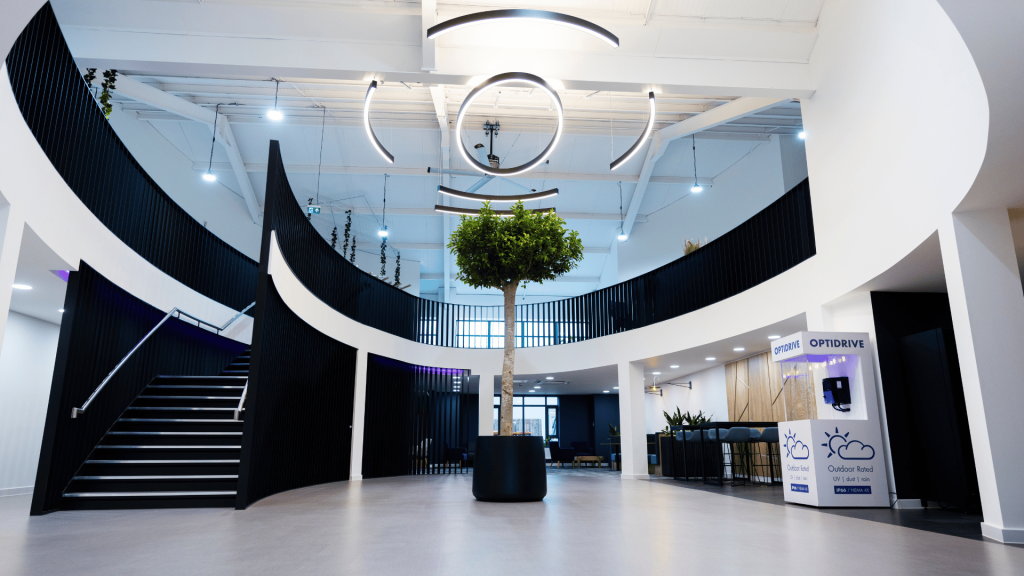
We delivered a warehouse transformation for Invertek Drives at their factory in Welshpool which is a great example of a project that requires both technical improvements and design changes to help create an engaging workplace. The technical aspects of this project were fundamental to the property performing to the level Invertek needed. Our team had to make adjustments and considerations for the structural strength of the building, load-bearing capacity for machinery, solutions for ventilation and insulation had to be provided and we also had to ensure that the ceiling heights were adequate for Invertek’s specialist equipment.
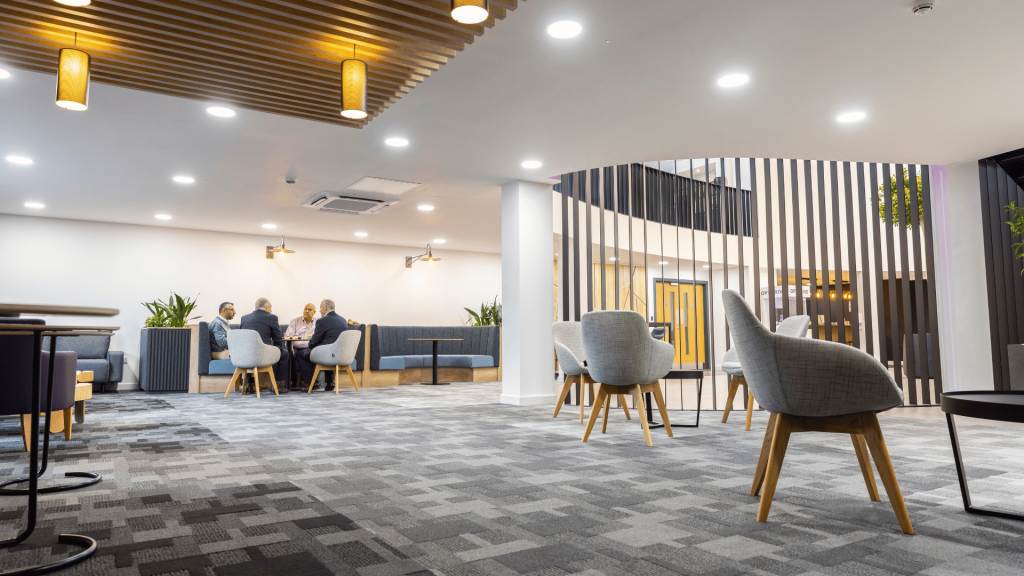
There is a balance between industrial and modern comfort in this workplace and that comes from the material selection and space planning. To help offset the industrial interior, finishes like natural timber and planting have been introduced to soften the space and make it feel more homely. These details are simple when compared to the technical complexity of the adjustments made to the HVAC and building structure but it demonstrates how warehouses can be reimagined into spaces that blend performance and experience.
3. Training and Development Facilities
With more businesses embracing hybrid working practices, there are an increasing number of companies looking to improve their onsite development facilities to promote innovation and learning. One of the main benefits to investing in purpose-built spaces, like learning and development centres, is that companies can provide employees with workplaces that help to accelerate development and knowledge transfer across the business.
The project we delivered for Baxi Solutions Academy is a great example of how warehouse space can be transformed into a highly customised environment into training and development facilities that help drive innovation.
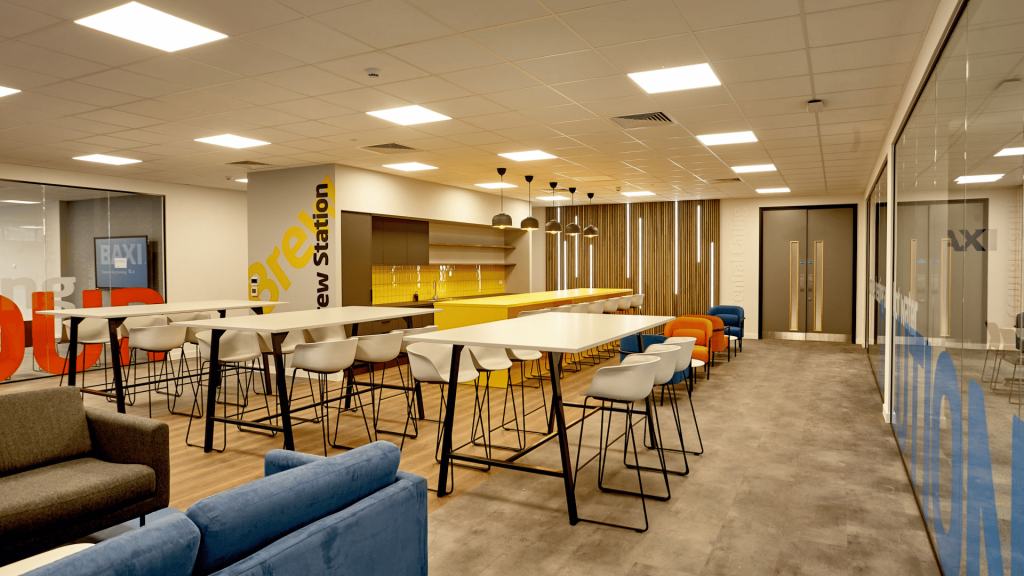
Engineering companies are putting more focus on in-office training facilities to keep up with fast-changing technology and industry standards. Having training centres onsite makes it easier to upskill staff as well as provide a long-term cost saving by replacing offsite development days with onsite meetings instead. There has also been a trend towards companies wanting to attract and retain new talent as it demonstrates the resources and investment available to staff in the business or looking to join.
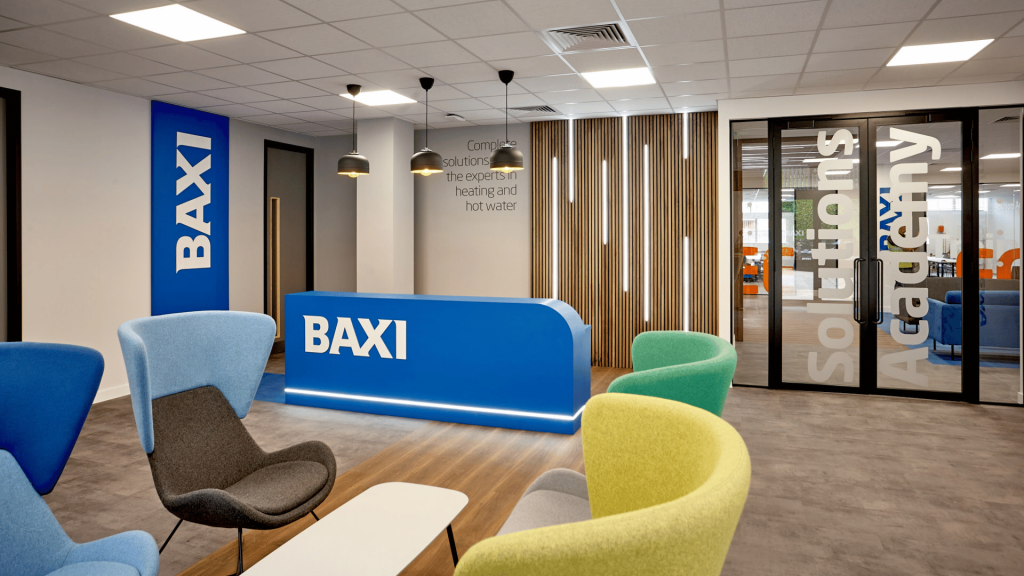
In addition to improving talent attraction propositions and enhancing the business culture, these development facilities have to be considered on a technical level. Key things to consider include good acoustic treatment, seamless AV to connect with hybrid teams and reconfigurable layouts that allow these spaces to be adapted to the various setups required by the business.
The dynamic needs of engineering companies
The engineering sector is broad, and every business comes with its own set of requirements. That’s what makes designing these workplaces so complex. It is important to work with a design partner that not only understands office design, but also the technical nuances of engineering environments.
From highly specialised systems like compressed air, to phased works that minimise downtime, creating an engineering office calls for a mix of disciplines. The key is to consider these elements early. Once the requirements are clear, the whole project team can align around the same goals and shape the space around what matters most.
While there are similarities to other sectors, engineering offices place more focus on technical specifications and how the space can support the functions and processes of a specific location. Our experience has shown us that success lies in balancing technical detail with a bigger vision of how the workplace engages its people.
If you need advice on how to design your next engineering office, get in touch with our expert team today.

It All Starts With a Conversation
If you have a question, if you are looking for some bespoke advice, get in touch with our experts today, we’d love to hear about your project.
For a no-obligation chat about your office needs, complete the form below and one of our specialists will be in touch.