

 Office
 The engineering sector is one of the major contributors to the UK’s economy and has steadily grown to become one of its core business sectors. According to the latest figures from the Royal Academy of Engineering, there are over 729,000 engineering companies in the UK, employing around 8 million people. This is predominantly due to the increase in government infrastructure projects as well as a big push towards the UK’s net zero goals for 2050.
This has also seen companies in the engineering sector expand their workforce and increase their real estate footprint with warehousing, labs, and office space. Office space is an important consideration within the engineering sector and represents a destination that brings a number of different skill sets together under one roof.
Much in the same way that offices are designed to enhance collaboration and productivity in the tech sector or the legal sector, engineering companies have their own requirements for how their working environment can improve performance and support new ways of working. Here’s a list of the must-have features when designing an engineering office space.
Zoning
One of the biggest challenges to consider in an engineering workspace is how to create a balance between open spaces designed for collaboration while still providing sufficient private spaces for individual, focused work. With the roles and disciplines in these businesses being so varied and specialised, it is not enough to create a large open-plan space with a few phone booths.
We have designed and delivered workspaces for multiple engineering companies, and one trait we have seen repeatedly is the need for engineers to seamlessly change work modes. People need to retain the ability to switch between private working and group collaboration, both in person and remotely, without being let down by their surroundings.
Read more about how we delivered a new flexible layout for global engineering and consultancy firm, Stantec.
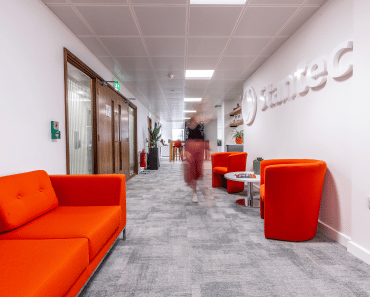
Quiet zones with low noise, minimal traffic, and clear boundaries support focused working. Designing more collaborative spaces equipped with writable walls, large screens, and flexible furniture helps to foster discussions and group project work. This is why zoning and designing dedicated spaces tailored to specific ways of working is crucial to engineering workspaces. Zoning allows for variation without taking away the element of choice, enabling each engineer to work in a setting that supports the task they are working on.
Technology and connectivity
Technology and connectivity are both crucial elements within engineering offices because the role of technology is directly linked to much of an engineer’s workflow and processes. Plus, with the role of hybrid working being so influential to modern business practices, the success of digital and in person collaboration relies heavily on high-quality technology in the workplace.
Modern engineering relies heavily on high-performance hardware and specialised design software, all linked to digital infrastructure. The office layout needs to accommodate these facilities by ensuring power supplies are sufficient and Wi-Fi throughout the office space is fast and reliable. In addition to this, there is the consideration of how technology enables collaboration. Typical examples include meeting rooms with video-conferencing capability as well as digital whiteboards.

With more businesses moving their servers to the cloud, workflows and documentation are stored in shared systems like OneDrive, which need to be accessed from multiple locations. In short, when planning an engineering office, integrating the right technology from the start is essential to enabling productivity and innovation.
Light and air quality
In engineering workplaces, there is a strong focus on precision and decision-making. A number of factors influence these skills, but access to natural light and good air quality are two of the biggest ways to make a positive impact on staff. Research conducted by Harvard’s Healthy Building Programme has shown the positive impact that exposure to natural light and fresh air have on people. Where poor ventilation can negatively affect cognitive function, individuals working in high-performing, green certified buildings display higher cognitive ability and fewer health symptoms.
Buildings play a big part in light and air quality, and engineering companies in particular often work in converted warehouse units that enable them to merge lab space or manufacturing facilities with office space. These conversions can be fantastic solutions, but considerations for light and air need to be made, as these structures are not created in the same way as a commercial office block.
Maximising daylight is another technique to improve wellbeing and satisfaction in the workplace. This can be achieved by positioning workstations and collaboration spaces near windows and using glass partitions for increased light flow through the office.
The best way to achieve good air quality in your workplace is to invest in high-quality Heating, Ventilation and Air Conditioning (HVAC) to ensure your fresh air levels and thermal comfort are sufficient and consistent. Another way to do this is to incorporate plants and biophilic design into your office, as plants help to improve air quality by reducing CO₂ levels.
These simple additions can make the office a more enriching environment, actively enhancing staff wellbeing. Factors like air quality, light, and thermal comfort combine to improve performance and show that functional improvements can come from environmental changes as well as physical design elements.
Storage
Storage may sound like a basic consideration, but it can sometimes be overlooked in the office design process. Physical storage in the office is fundamental within an engineering workspace. Despite the requirement for storage solutions seeming at odds with the push for technology in a digital workplace, it perfectly summarises the merging of two worlds within engineering projects.
Even with more of the workload and projects becoming digital-first, there is still a practicality in being able to store prototypes, materials, and drawings. With all of these physical elements comes the need for storage and this space allocation must be considered from an early stage. Having stacks of samples or components piled in a corner or stored away from where the team needs access to them is inefficient and a poor use of space.
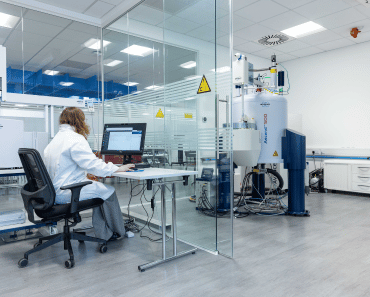
Designing dedicated storage solutions is all about proximity so that teams and individuals who need their samples or models can access them quickly. The location of this also needs to take into consideration the other tasks staff complete with these physical elements. Being able to design a space that integrates the workflows and practices of teams is the ultimate goal for improving workspace functionality.
In addition, there may also be a requirement for personal storage, particularly if you operate more flexible working practices without dedicated desks. These lockers need to be planned into the office space and positioned in the correct areas to ensure the most efficient flow. The role of storage is important, and to help maximise functionality in your office, all of these finer details have to be thought about in the design of your space.
Designing engineering spaces
The key to designing effective workplaces for engineering companies comes from an understanding of the type of work these companies do and the profiles of the individuals who work within them. These four must-haves are a starting point for designing an effective engineering space, though there are other key factors you need to get right.
Each company has its own requirements, so each specification will have slightly different needs but by considering these four workplace components, you give yourself a head start in deciding how your space should function and what it may look like.
Our extensive experience in the engineering sector demonstrates our in-house knowledge and skill sets. If you are looking for guidance and support for your new engineering office, get in touch with our team.

It All Starts With a Conversation
If you have a question, if you are looking for some bespoke advice, get in touch with our experts today, we’d love to hear about your project.
For a no-obligation chat about your office needs, complete the form below and one of our specialists will be in touch.