

 Office
The design and implementation of a sustainable office fit out are no longer just matters of aesthetics and comfort. As businesses globally commit to reducing their carbon footprints and achieving net zero carbon goals, every decision—whether about space layout, material selection, or energy management systems—plays a vital role.
One of the big challenges that has been highlighted by the UK Green Building Council (UKGBC) is that while there is greater awareness of businesses looking to reduce their impact, key opportunities to retrofit spaces are being missed. The UKGBC reported that “low cost, low disruption measures that reduce energy consumption are being missed”. This goes to show that efforts must be made to find opportunities to change our processes rather than constantly building and buying new buildings and materials.
Office fit outs that align with net zero objectives need to reflect a deep understanding of regulatory frameworks, smart resource management, and an ethical approach to waste reduction and material reuse. In this article, we explore key considerations for designing a net zero fit out and how businesses can balance sustainability with functionality.
What is a NET Zero Carbon Fit Out?
A carbon net zero fit out refers to creating commercial office interiors in a way that minimises greenhouse gas emissions to achieve a “net zero” carbon footprint.
To achieve a carbon net zero fit out, each aspect of the design and construction process is examined and optimised against sustainability guidelines and certifications. Carbon net zero office fit outs are becoming increasingly popular as organisations aim to meet corporate sustainability goals and align with environmental standards.
What are the frameworks and reporting bodies guiding net zero decisions?
Businesses looking to align with net zero goals must be guided by several frameworks and regulatory bodies that not only provide the technical and strategic guidance but also ensure that every phase of the office fit out is aligned with the broader sustainability agenda.
UKGBC Framework
One of the key frameworks businesses will work within is the UKGBC Net Zero Carbon Buildings Framework.
This framework emphasises reducing both operational carbon and embodied carbon. As businesses plan their office fit outs, ensuring the design considers the building’s entire lifecycle is essential if aiming to reach specific carbon reduction targets. This is why the emphasis on sustainable materials and energy-efficient systems has increased in recent years as these decisions directly influence the building’s overall carbon footprint.
LETI Framework
Another key framework to be aware of is the LETI (London Energy Transformation Initiative) The LETI Climate Emergency Design Guide has been created to provide a detailed approach to creating low-energy, low-carbon buildings. This guide has been developed by a community of over 1,000 built environment professionals, advocates for fabric-first design, meaning that materials and structures are chosen for their energy efficiency. LETI also stresses the importance of creating buildings that are adaptable and resilient to future needs, which ties into the notion of future-proofing office spaces.
BREEAM Certification
Outside of these more detailed frameworks, most businesses will likely be aware of BREEAM (Building Research Establishment Environmental Assessment Method) ratings.
BREEAM is one of the world’s leading sustainability assessment methods for master planning projects, infrastructure, and buildings. By achieving high BREEAM ratings, a business can demonstrate its commitment to sustainability and significantly reduce both operational and embodied carbon. This certification process covers various sustainability factors, from energy efficiency and material use to water management and waste reduction, ensuring the project meets best-in-class environmental standards.
Depending on how far you wish to go with your net zero goal, you may not need to know the ins and outs of the UKGBC and LETI frameworks, however it is important to be aware of their guidelines if you are pursuing more detailed, intricate net zero ambitions.
If you are interested in ensuring your fit out meets your Net Zero ambitions, our dedicated team can advise you on how to create sustainable workspaces and the which steps you need to take for the entirety of your project
Maximising Space Efficiency for Sustainability
Designing an office fit out that maximises space efficiency can significantly reduce the building’s carbon footprint. This goes beyond merely optimising square footage; it means designing adaptable spaces that respond to evolving work patterns and minimise waste. In the past, office spaces were designed with single-purpose areas, leading to overuse of resources and underutilised space.
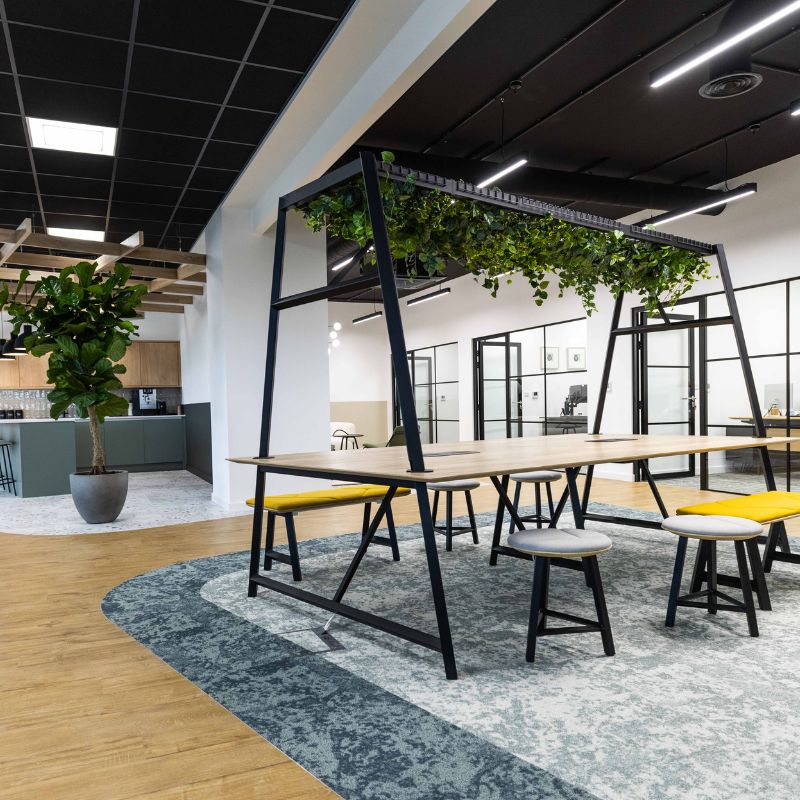
However, the modern trend toward flexible workspaces with features like hot-desking, collaborative zones, and flexible meeting spaces, has shown that businesses can use less physical space without compromising productivity. This approach minimises the need for new construction materials and reduces the embodied carbon of the office fit out.
By incorporating multi-use areas that can transition between workstations, breakout zones and meeting rooms, fewer materials are required to create separate, single-function spaces. When organisations are looking for ways to reduce their footprint, flexible spaces that can be reconfigured easily are good options that reduce the need for frequent refurbishments. By creating adaptable spaces, organisations can reduce the total footprint per person, lowering embodied energy in construction and operation.
The Role of Material Selection in Meeting Net Zero Goals
Material selection is one of the most significant factors in determining the carbon footprint of an office fit out. The decision between using virgin materials or embracing a circular economy approach can dramatically affect both the embodied carbon and the overall sustainability of the project.
Virgin materials, while sometimes necessary for structural or safety reasons, have a higher carbon footprint due to the energy-intensive processes involved in their extraction, production, and transportation. Using all-new materials also contributes to the depletion of natural resources, further increasing the environmental impact of the fit out. New steel and concrete have some of the highest embodied carbon figures due to the emissions generated during their production.
Choosing these materials for a fit out, when alternatives are available, can significantly increase the project’s carbon footprint. Therefore, careful consideration of the necessity of new materials is vital to align with Net Zero goals.
Circular Economy and Sustainable Sourcing
A circular economy approach, on the other hand, focuses on minimising waste and keeping materials in use for as long as possible. This approach encourages the reuse, recycling, and repurposing of materials, which can drastically reduce the embodied carbon of an office fit out. Reusing existing furniture from the previous office or purchasing second-hand items can significantly reduce the carbon impact.
In addition, sourcing materials from local suppliers help to cut down on transportation-related emissions. Locally sourced, recycled, or upcycled materials also contribute to the circular economy and support sustainability. By retaining existing building and fit out materials (partitions, ceiling grid, doors etc) and reusing or repurposing some furniture, this option can lead to a reduction of embodied carbon by 20-30% or more, depending on the specifics of the materials used.
Reusing materials and furniture eliminates some of the expenses associated with purchasing new items, and the project timeline may be shortened since fewer materials need to be sourced and installed.
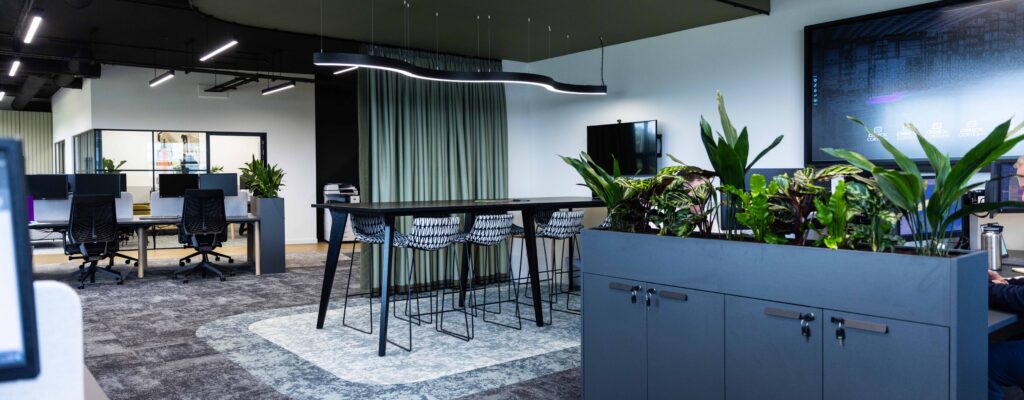
The Role of Technology in Achieving Net Zero
In the quest to reduce carbon emissions, technology plays a crucial role. From smart sensors that track real-time energy consumption to advanced data analytics platforms, technology allows businesses to optimise resource use and identify inefficiencies.
Data Driven Resource Management
Incorporating smart building technologies further improves space efficiency and sustainability. For instance, by linking lighting and HVAC systems to real-time occupancy data, businesses can significantly reduce energy consumption. These systems ensure that energy is only used when and where it’s needed.
When occupancy is low, lighting and air conditioning automatically adjust, optimising energy use without requiring manual Intervention. Advanced energy monitoring systems can provide businesses with insights into energy consumption patterns, identifying inefficiencies and allowing for quick adjustments. This continuous optimisation process is a key part of maintaining a net zero office. Over time, the data collected helps inform further sustainability strategies, ensuring that the building remains as efficient as possible long after the initial fit out is complete.
Predictive Maintenance
Predictive maintenance is another area where technology is making a significant impact. By monitoring the performance of building systems in real time, businesses can identify potential issues before they lead to breakdowns. This reduces downtime, avoids unnecessary replacements, and minimises waste, all of which contribute to a lower carbon footprint.
Achieving a Net Zero Office Fit-Out
Designing an office fit out for a net zero carbon goal is a multifaceted process that requires careful consideration of regulatory frameworks, material selection, and energy management. By embracing circular economy principles, integrating smart building technologies, and partnering with ethical disposal companies, businesses can reduce both their operational and embodied carbon while enhancing the sustainability of their office environments.
Ultimately, the path to net zero carbon is not a single action but a series of thoughtful, interconnected decisions. From the design stage through to the management of resources after the project is complete, each step offers an opportunity to reduce environmental impact and contribute to a more sustainable future. By taking a proactive, data-driven approach, businesses can not only meet their sustainability targets but also set a standard for the future of office fit outs.
Speak to one of our team for more information on how to achieve your net zero carbon goals with your workplace.

It All Starts With a Conversation
If you have a question, if you are looking for some bespoke advice, get in touch with our experts today, we’d love to hear about your project.
For a no-obligation chat about your office needs, complete the form below and one of our specialists will be in touch.